Today, Americans can watch presidential speeches live on television, stream events online, and receive updates from the White House within seconds. But how did presidents communicate with Americans before television became a household technology?
For much of American history, presidents relied on newspapers, public speeches, letters, telegraphs, radio broadcasts, and other methods to reach the public. While these communication tools seem slow by modern standards, they played a crucial role in shaping public opinion and connecting presidents with citizens across a growing nation.
Understanding how presidential communication evolved offers a fascinating look at both American history and the development of modern media.
The Early Years: Letters and Printed Messages
The first presidents governed in an era without electronic communication.
Written Correspondence Was Essential
During the administrations of early presidents such as George Washington and Thomas Jefferson, letters served as one of the primary ways government officials communicated.
Presidents regularly exchanged correspondence with:
- Members of Congress
- State governors
- Military leaders
- Foreign diplomats
- Influential citizens
Many of these letters were later published in newspapers, allowing the public to learn about presidential views and policies.
Annual Messages to Congress
Presidents also communicated through official addresses and written reports.
The annual message to Congress, which later became known as the State of the Union Address, provided updates on national affairs and policy priorities.
In the early republic, these messages were often delivered in writing rather than as public speeches.
Newspapers Became the Main Connection to the Public
For much of the nineteenth century, newspapers were the dominant source of information.
Presidential Speeches Reached Readers Nationwide
When presidents delivered speeches, newspapers often printed lengthy excerpts or even complete transcripts.
This allowed citizens across the country to follow presidential announcements despite never seeing or hearing the president directly.
As newspaper circulation expanded, presidential messages reached increasingly larger audiences.
Political Newspapers Influenced Public Opinion
Many newspapers openly supported political parties and candidates.
As a result, the way presidential statements were reported could vary significantly depending on the publication’s political perspective.
Even so, newspapers remained the most important communication channel for presidents before the rise of electronic media.
Public Speaking Became More Important
As transportation improved during the nineteenth century, presidents gained more opportunities to address citizens directly.
Campaign Tours and Public Addresses
Although early presidents often avoided active campaigning, later presidents embraced public appearances.
Candidates and presidents traveled to:
- Major cities
- State fairs
- Dedication ceremonies
- Political gatherings
These events allowed leaders to speak directly to audiences and generate newspaper coverage.
Abraham Lincoln’s Influence
Abraham Lincoln demonstrated the power of public speaking through addresses such as the Gettysburg Address and his inaugural speeches.
Although many Americans never heard Lincoln speak in person, newspaper reports spread his words throughout the country.
The Telegraph Revolutionized Presidential Communication
One of the most important technological advances of the nineteenth century was the telegraph.
Faster Communication During the Civil War
The telegraph allowed messages to travel almost instantly across long distances.
During the Civil War, Lincoln frequently used telegraph offices to communicate with military commanders and receive battlefield updates.
This technology dramatically improved the speed of government communication.
Breaking News Reached the Public Faster
Newspapers could now receive presidential statements and national news much more quickly than before.
The telegraph helped shrink the distance between Washington and the rest of the nation.
Radio Changed Everything Before Television
When discussing how did presidents communicate with Americans before television, radio represents the most significant development.
A Direct Connection to Citizens
For the first time, Americans could hear the president’s voice in their own homes.
This transformed the relationship between presidents and the public.
Rather than relying solely on newspapers to relay information, presidents could speak directly to millions of listeners.
Franklin Roosevelt’s Fireside Chats
No president used radio more effectively than Franklin D. Roosevelt.
His famous Fireside Chats became a powerful communication tool during the Great Depression and World War II.
Roosevelt used these broadcasts to:
- Explain government policies
- Address public concerns
- Build confidence during crises
- Provide updates on national events
The conversational tone helped Americans feel personally connected to their president.
Other Communication Methods Presidents Used
Before television, presidents also relied on several additional methods to communicate.
Printed Government Documents
Official reports, proclamations, and executive messages informed the public about government actions.
Public Ceremonies
Presidents often spoke at inaugurations, memorials, military events, and celebrations that received significant newspaper coverage.
Interviews and Press Relations
As journalism evolved, presidents increasingly interacted with reporters who helped distribute information to the public.
These early forms of media relations eventually developed into the modern White House press system.
How Communication Changed with Television
Television began transforming presidential communication after World War II.
For the first time, Americans could not only hear the president but also see facial expressions, body language, and live events.
Television increased the importance of public image and presentation, fundamentally changing the presidency.
Yet many communication strategies developed before television—speeches, media interviews, public appearances, and direct messaging—remain important today.
Harry Truman and the First Televised Presidential Address
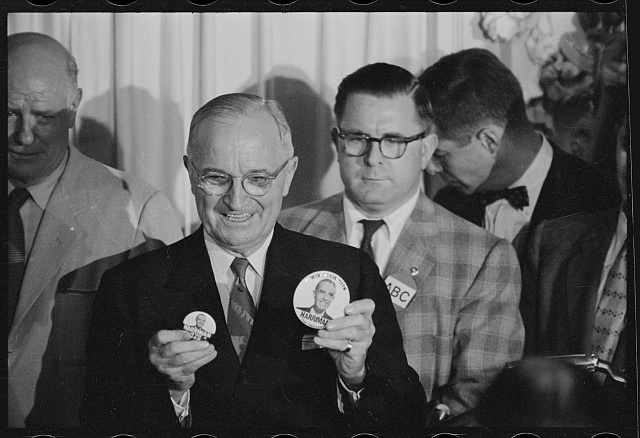
In 1947, President Harry S. Truman made history by delivering the first televised presidential address from the White House. While radio had been the dominant medium for presidential communication for decades, television was beginning to emerge as a powerful new way to reach Americans directly. Truman’s address marked a turning point in presidential communication, allowing citizens not only to hear their president’s words but also to see his expressions, demeanor, and leadership style in real time. Although only a small percentage of American households owned television sets at the time, the broadcast demonstrated the future potential of television as a political tool. Truman’s pioneering use of the medium paved the way for future presidents to connect with the public through televised speeches, press conferences, and national addresses, fundamentally changing how Americans experienced the presidency.
How Did Presidents Communicate with Americans Before Television?
So, how did presidents communicate with Americans before television? They relied on letters, newspapers, public speeches, telegraphs, official government documents, and eventually radio broadcasts to share information with the public.
Each technological advancement brought presidents closer to the American people. From handwritten correspondence in the eighteenth century to Franklin Roosevelt’s radio addresses in the twentieth century, presidential communication continually evolved alongside the nation itself. Understanding these methods provides valuable insight into how American leaders connected with citizens long before the television age transformed political communication forever.