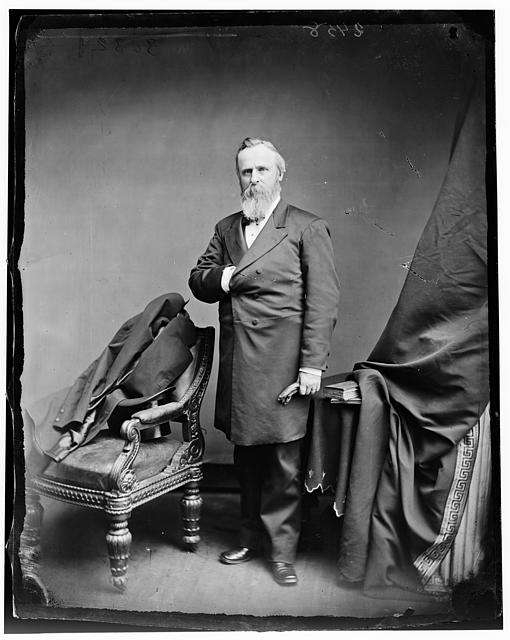
When people think about innovation in the White House, they often picture modern tools like secure communications systems or digital briefings. Few realize that one of the earliest steps toward a technologically connected presidency happened in the late 19th century under Rutherford B. Hayes. His administration quietly introduced a groundbreaking device that would forever change how leaders communicate: the telephone.
A New Invention Arrives in Washington
The telephone, invented by Alexander Graham Bell in 1876, was still a curiosity when it first appeared. At the time, most Americans relied on letters or in-person conversations. Instant communication across distance was almost unimaginable.
That same year, Hayes assumed the presidency following the highly contested United States presidential election of 1876. While his presidency is often remembered for political compromise and the end of Reconstruction, it also marked a subtle but important embrace of new technology.
In 1877, just one year after Bell’s invention debuted, a telephone was installed in the White House. This made Hayes the first sitting president to have access to this revolutionary device. While it may seem like a small step today, it signaled a major shift in how the executive branch could operate.
The First White House Phone Line
The early telephone system was nothing like what we know today. In fact, the White House had only a single line, and its reach was extremely limited. According to historical records, the phone’s number was simply “1.” It connected primarily to the Treasury Department, not a wide network of users.
Despite its limitations, this installation represented a leap forward. Communication that once took hours or days could now happen almost instantly, at least within a small radius. For a president managing national issues, even this modest improvement had meaningful implications.
Hayes himself reportedly used the phone sparingly. Like many people of his time, he was more comfortable with traditional communication methods. Still, the presence of the telephone in the White House showed a willingness to experiment with innovation at the highest level of government.
Skepticism and Curiosity Around New Technology
The late 1800s were a time of rapid invention, but not everyone immediately trusted new technologies. The telephone, in particular, was met with skepticism. Some people questioned its reliability, while others simply found it strange to speak into a device and hear a distant voice.
Hayes’ decision to allow the installation of a telephone demonstrated openness to progress, even if adoption was gradual. It also helped legitimize the technology. When the president of the United States embraced a new invention, it sent a signal to the rest of the country that it was worth paying attention to.
This moment reflects a broader pattern in American history: the White House often serves as a testing ground for innovations that later become standard in everyday life.
A Foundation for Future Presidential Communication
While Hayes did not rely heavily on the telephone, his administration laid the groundwork for future presidents to do so. Over time, the White House would expand its communication capabilities dramatically.
By the early 20th century, telephones became more common, and later advancements like radio, television, and eventually the internet would transform presidential communication even further. Each step built upon earlier moments like the one during Hayes’ presidency.
Today, the president has access to secure global communication systems that allow real-time conversations with leaders around the world. These capabilities can be traced back, in part, to that first simple telephone line installed in 1877.
Technology and Leadership Go Hand in Hand
Hayes’ embrace of the telephone highlights an important truth about leadership: progress often depends on a willingness to adapt. Even if a new tool is unfamiliar or imperfect, early adoption can set the stage for long-term change.
This idea remains relevant today. Modern presidents must navigate rapidly evolving technologies, from cybersecurity to artificial intelligence. The challenges may be more complex, but the principle is the same. Leaders who understand and engage with innovation are better positioned to guide the country forward.
A Small Step with Lasting Impact
The story of the first White House phone is easy to overlook, especially compared to the larger political events of Hayes’ presidency. Yet it represents a pivotal moment in the evolution of communication in government.
By bringing the telephone into the White House, Rutherford B. Hayes helped usher in a new era. What began as a single line with limited use eventually grew into the vast, interconnected systems that define modern leadership.
It is a reminder that even small technological steps can have far-reaching consequences. In Hayes’ case, a quiet decision to adopt a new invention helped shape the future of presidential communication and set a precedent for innovation at the highest level of power.