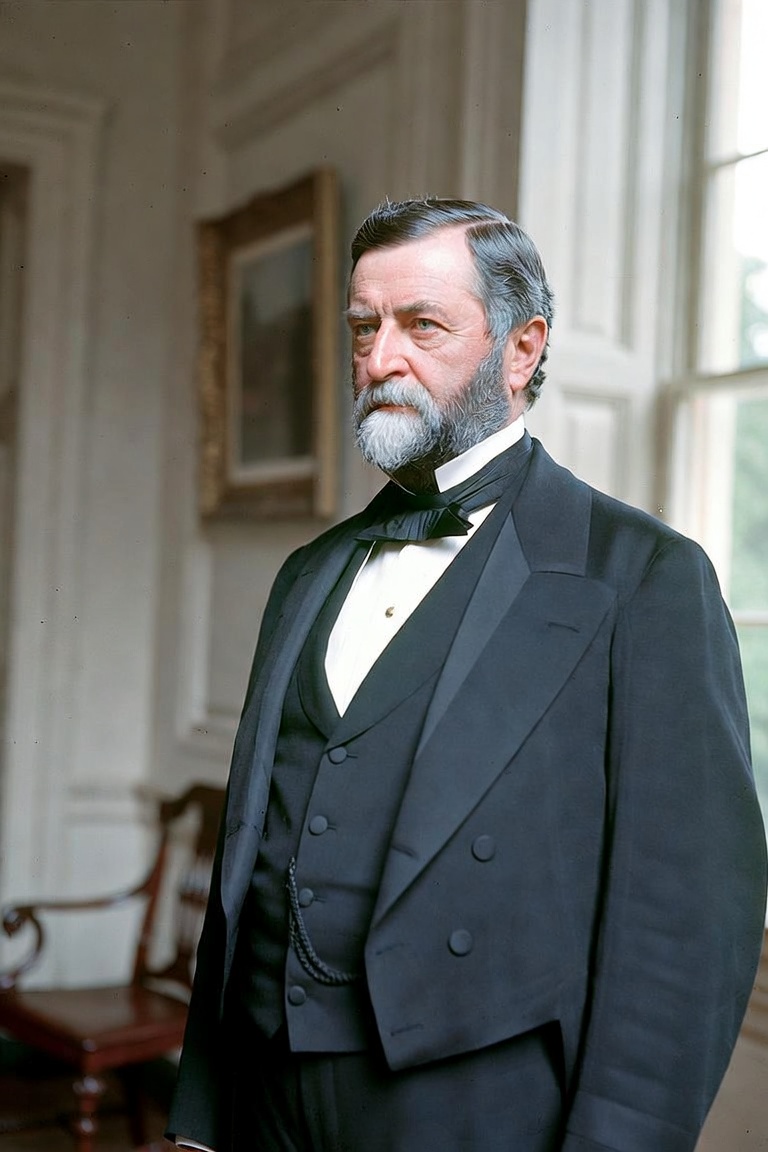
Short answer: Ulysses S. Grant fought corruption in government by supporting civil service reform, prosecuting corrupt officials, creating new enforcement agencies, and attempting to clean up scandals within his administration. Although Grant’s presidency became associated with several corruption scandals, he personally supported efforts to investigate wrongdoing and took steps to make the federal government more accountable.
Ulysses S. Grant is often remembered as the Union general who helped win the Civil War, but his presidency from 1869 to 1877 is also an important part of American political history. Grant entered the White House during the Gilded Age, a period when rapid economic growth was accompanied by political corruption and concerns about government influence.
While some members of his administration were involved in scandals, Grant himself worked to address corruption and improve government oversight. His presidency shows the challenges of reforming a government system that had become deeply influenced by political patronage.
Grant Took Office During the Gilded Age
When Ulysses S. Grant became president in 1869, the United States was entering the Gilded Age.
This era was marked by industrial expansion, railroad growth, and increased wealth, but it also saw widespread political corruption. Government jobs were often awarded based on political connections rather than qualifications. This system, known as the spoils system, allowed elected officials to reward supporters with government positions.
Grant inherited a federal government where patronage was common, and many Americans believed reforms were necessary to restore public trust.
He Supported Civil Service Reform
One of Grant’s most important efforts to fight corruption was his support for civil service reform.
At the time, many government employees were chosen because they supported a particular political party. Grant believed government positions should be filled by qualified individuals rather than political allies.
In 1871, he signed legislation creating the first Civil Service Commission, which was designed to study ways to improve federal hiring practices.
The commission recommended using competitive examinations and professional qualifications for government positions. Although the reforms were limited and did not completely replace the spoils system, Grant’s support marked an important early step toward modern civil service.
Grant Appointed Reformers to Investigate Corruption
Grant attempted to combat corruption by appointing officials who supported government reform.
One of his most successful choices was Benjamin Bristow, whom Grant appointed as Secretary of the Treasury in 1874.
Bristow led an investigation into the Whiskey Ring, a major tax fraud scheme involving distillers and government officials. The investigation uncovered millions of dollars in unpaid taxes and resulted in numerous convictions.
The scandal was especially damaging because it involved people connected to Grant’s administration. However, Grant supported the investigation and allowed Bristow to pursue those responsible.
Grant famously stated that he wanted “let no guilty man escape,” showing his willingness to hold corrupt officials accountable.
The Whiskey Ring Investigation
The Whiskey Ring was one of the biggest corruption scandals of Grant’s presidency.
Beginning in the early 1870s, distillers worked with government officials to avoid paying federal taxes on whiskey production. The network involved officials from multiple levels of government and cost the federal government millions of dollars.
When Bristow uncovered the scheme, Grant approved aggressive action against those involved.
More than 100 people were indicted, and several were convicted. The investigation demonstrated that Grant was willing to challenge corruption, even when it affected members of his own political party.
Grant Created the Department of Justice
Another important reform during Grant’s presidency was the creation of the Department of Justice in 1870.
Before this time, federal legal responsibilities were scattered among different offices. Creating a centralized Department of Justice gave the federal government a stronger ability to enforce laws and investigate wrongdoing.
The department helped professionalize federal law enforcement and provided a stronger foundation for fighting corruption in future administrations.
Challenges and Scandals Within His Administration
Despite Grant’s efforts, his presidency was damaged by several scandals.
Some of Grant’s closest political associates were involved in corruption, including the Credit Mobilier scandal, which involved members of Congress and the Union Pacific Railroad, and the Sanborn Contract scandal, involving government tax collections.
Grant was not personally proven to have participated in these scandals, but critics argued that he was too trusting when choosing advisers and failed to recognize corruption happening around him.
His reputation suffered because of the actions of members of his administration.
Grant’s Relationship With Reform
Grant’s approach to corruption was complicated.
He supported investigations, punished some corrupt officials, and backed reform efforts. However, he also continued to rely on political allies and did not fully dismantle the patronage system.
Many historians view Grant as a president who wanted reform but struggled with the political realities of his time.
His administration helped create important institutions and ideas that later reformers would build upon, even though corruption remained a major problem.
How Successful Was Grant at Fighting Corruption?
| Action | Impact |
| Created Civil Service Commission | Began efforts to improve federal hiring |
| Supported Whiskey Ring investigation | Held corrupt officials accountable |
| Created Department of Justice | Strengthened federal law enforcement |
| Appointed reform-minded officials | Increased government oversight |
Grant’s record was mixed, but his presidency included some of the earliest serious attempts to make the federal government more professional and transparent.
Frequently Asked Questions
Was Ulysses S. Grant personally corrupt?
No. Although Grant’s administration experienced multiple scandals, historians generally do not consider Grant personally corrupt. His main weakness was trusting some advisers and political allies who became involved in wrongdoing.
What was the Whiskey Ring scandal?
The Whiskey Ring was a tax fraud scheme in which distillers and government officials worked together to avoid paying federal taxes. The investigation during Grant’s presidency led to numerous convictions.
Did Grant help create modern government reform?
Yes. Grant supported early civil service reform and created the Department of Justice, both of which influenced future efforts to make government more professional and accountable.
Grant’s Fight
Ulysses S. Grant fought corruption in government by supporting civil service reform, investigating scandals, prosecuting dishonest officials, and creating stronger federal institutions. Although his administration became associated with corruption because of the actions of some advisers and officials, Grant himself worked to expose and punish wrongdoing.
Grant’s presidency demonstrates how difficult reform can be when corruption is deeply connected to political systems. While he did not eliminate government corruption, his efforts helped establish important reforms that shaped the future of American government.