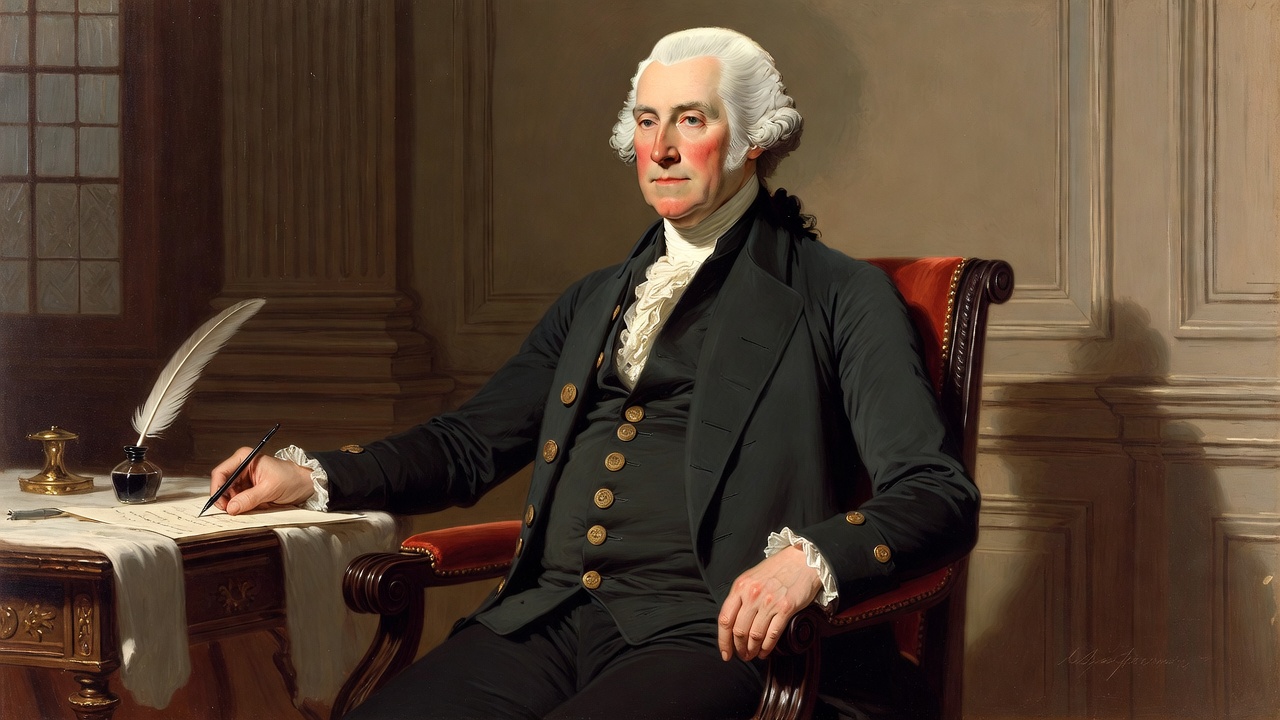
When the United States created the presidency in 1789, the Constitution outlined the office but left many details unanswered. There was no playbook for how a president should act, lead, or interact with Congress and the public. That challenge fell to George Washington, who became the nation’s first president and set standards that still influence the executive branch today.
Many of the customs Americans now associate with the presidency began because Washington understood that every action he took would create a precedent. Through careful leadership, restraint, and practical decision-making, he established executive traditions that helped define the office for generations.
Creating Respect for the Presidency
One of Washington’s first priorities was giving the new presidency legitimacy. After years of monarchy under King George III, many Americans feared executive power. Washington needed to show that a president could be strong without becoming king-like.
He approached the office with dignity and seriousness. Washington dressed formally for public occasions, held structured receptions, and emphasized the importance of national unity. At the same time, he rejected grand titles such as “His Highness” or “His Majesty.” Instead, he accepted the simpler title of Mr. President, which remains in use today.
This balance helped Americans respect the office while understanding that the president served the people, not ruled over them.
Building the First Presidential Cabinet
The Constitution mentions department heads but does not specifically create a presidential cabinet. Washington recognized the need for trusted advisors and formed a group of leading officials to help guide the new government.
His first cabinet included Thomas Jefferson as Secretary of State, Alexander Hamilton as Secretary of the Treasury, Henry Knox, and Edmund Randolph.
Washington regularly met with these advisers to debate policy and gather recommendations. This practice became the model for the modern cabinet system, where presidents rely on department leaders for expertise and administration.
Defining Presidential Neutrality and Restraint
Washington also established traditions regarding how much power a president should use. He believed the office should be energetic but limited by law and republican values.
During conflicts between Great Britain and France in the 1790s, Washington issued the Neutrality Proclamation of 1793. This declaration kept the young United States out of European wars and demonstrated that the president could direct foreign policy while protecting national interests.
He also used force carefully when necessary. During the Whiskey Rebellion, Washington called militia forces to enforce federal law. However, once order was restored, he showed restraint rather than seeking vengeance. This set an early example of enforcing laws while avoiding abuse of power.
Establishing Communication With Congress
Washington helped shape how presidents would interact with Congress. He personally delivered annual addresses to lawmakers, similar to what became the State of the Union. These speeches informed Congress about national conditions and legislative priorities.
He also consulted the Senate on treaties and appointments, helping define the constitutional relationship between the executive and legislative branches. While later presidents adjusted these methods, Washington’s efforts created important norms for cooperation and separation of powers.
Setting the Two-Term Tradition
Perhaps Washington’s most famous executive tradition was stepping down voluntarily after two terms. Many expected him to continue serving, and he likely could have remained in office indefinitely. Instead, he retired after eight years.
This decision was historic because it demonstrated that power in the United States would be temporary and peaceful. At a time when many nations were ruled by kings or strongmen, Washington’s departure reinforced republican government.
His example became an unwritten rule followed by presidents for more than 140 years until Franklin D. Roosevelt won four elections. The tradition was later formalized in the Twenty-second Amendment.
The Farewell Address and Peaceful Transfer of Power
Washington’s 1796 Farewell Address also shaped executive traditions. In it, he warned against excessive political partisanship, regional division, and permanent foreign alliances. Though not every warning was followed, the address became a lasting statement of presidential guidance.
Even more important, Washington peacefully transferred power to John Adams after the election of 1796. This peaceful transition became one of the most important traditions in American democracy.
Why Washington’s Executive Traditions Still Matter
Modern presidents operate in a vastly different world, but many traditions trace directly to Washington. Cabinet meetings, presidential addresses, limited terms, peaceful transfers of power, and the expectation of dignified leadership all began with his example.
Because the Constitution left room for interpretation, Washington’s choices gave shape to the presidency. He understood that the nation was watching and that future leaders would follow the standards he set.
The Traditions Live On
How did George Washington establish executive traditions? He did it through discipline, restraint, and a deep understanding of history. By creating customs that balanced authority with accountability, Washington transformed a new constitutional office into a stable institution.
More than two centuries later, the presidency still reflects the foundations he built. Few leaders in history have shaped an office so profoundly simply by showing how it should be done.