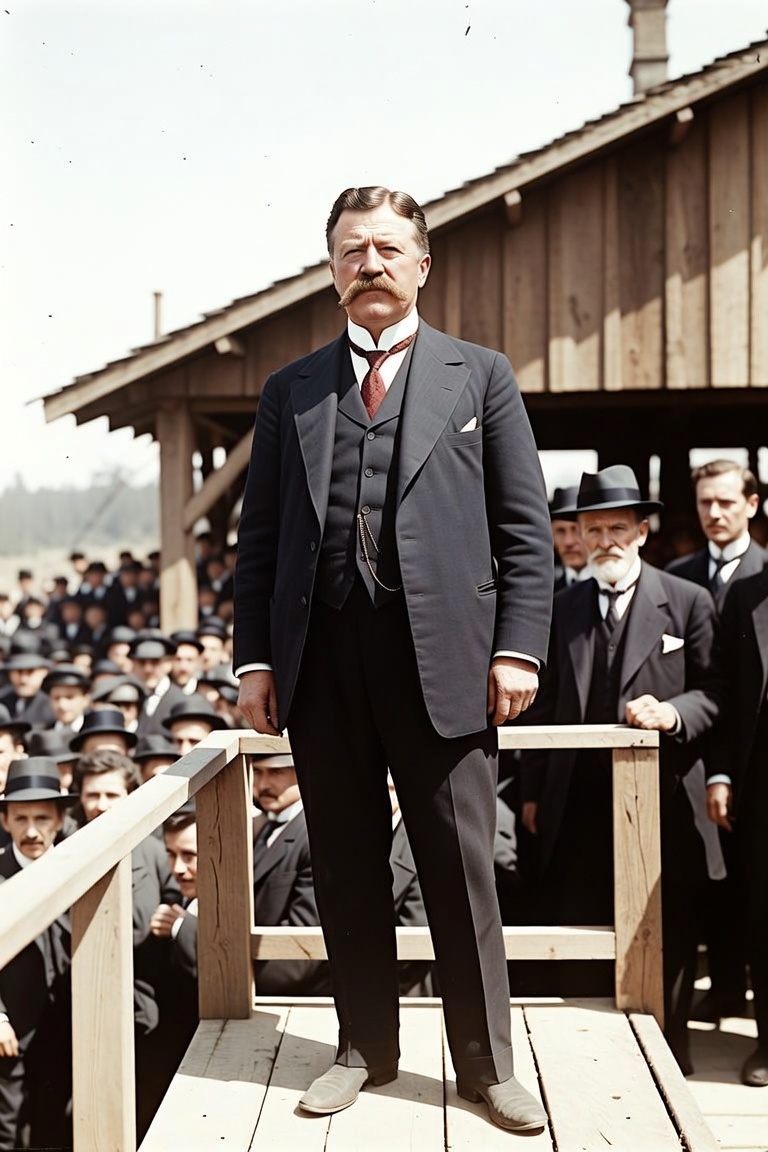
Short answer: Theodore Roosevelt made the presidency more powerful by expanding the role of the executive branch, actively enforcing federal laws, intervening in labor disputes, regulating big business, protecting millions of acres of public land, and taking a more assertive role in foreign policy. He believed the president should act in the public interest whenever the Constitution did not specifically forbid it, a philosophy that permanently reshaped the office.
When Theodore Roosevelt became president in 1901 following the assassination of William McKinley, the presidency was generally viewed as a more limited office than it is today. Many earlier presidents believed their powers were restricted to those explicitly listed in the Constitution.
Roosevelt rejected that view. He argued that the president should actively lead the nation, respond to new challenges, and use the full authority of the office to benefit the American people. His energetic leadership transformed expectations of what presidents could accomplish and helped create the modern presidency.
Roosevelt Believed the President Should Lead
One of Theodore Roosevelt’s most important contributions was his philosophy of executive power.
Roosevelt believed that presidents could take any action that served the public interest unless the Constitution specifically prohibited it. This became known as the Stewardship Theory of the presidency.
Rather than waiting for Congress to act, Roosevelt believed the president should take the initiative in solving national problems.
This approach differed significantly from many of his predecessors and greatly expanded the influence of the executive branch.
He Took On Powerful Corporations
Roosevelt demonstrated presidential leadership by challenging monopolies and enforcing federal law.
Using the Sherman Antitrust Act, his administration brought lawsuits against dozens of corporations accused of unfair business practices. The most famous case involved the Northern Securities Company, a massive railroad trust that the Supreme Court ultimately ordered dissolved.
His actions earned him the nickname “Trust Buster,” although Roosevelt often emphasized that he supported businesses that operated fairly and legally.
By actively regulating corporations, Roosevelt showed that the president could play a central role in protecting competition and consumers.
Roosevelt Intervened in the Coal Strike of 1902
One of Roosevelt’s most significant uses of presidential authority came during the Coal Strike of 1902.
When coal miners and mine owners reached a deadlock, millions of Americans faced the possibility of running out of fuel before winter.
Previous presidents had often sided with business owners or avoided becoming directly involved in labor disputes. Roosevelt took a different approach.
He invited both sides to the White House and pressured them to negotiate. The dispute was eventually settled through arbitration, giving workers higher wages and shorter hours while allowing mine owners to continue operating.
The episode demonstrated that the president could act as a neutral mediator rather than automatically supporting one side.
He Expanded the Federal Government’s Role
Roosevelt believed the federal government should actively address national problems.
During his presidency, Congress passed important legislation that strengthened federal oversight of food production and consumer safety.
The Meat Inspection Act improved inspections of meatpacking facilities, while the Pure Food and Drug Act established new standards for food and medicine sold to the public.
Although Congress passed these laws, Roosevelt strongly supported the reforms and used the influence of the presidency to build public support.
These actions expanded expectations about the federal government’s responsibility to protect consumers.
Roosevelt Protected America’s Natural Resources
Theodore Roosevelt also transformed the presidency through conservation.
Believing that America’s forests, rivers, and wildlife should be preserved for future generations, he dramatically expanded federal protection of public lands.
During his presidency, Roosevelt:
- Established five national parks.
- Created 18 national monuments.
- Protected approximately 150 national forests.
- Conserved more than 230 million acres of public land.
He worked closely with conservation leaders such as Gifford Pinchot to ensure natural resources would be managed responsibly rather than exploited without limits.
No previous president had made conservation such a central part of the executive agenda.
He Expanded America’s Role in World Affairs
Roosevelt also strengthened presidential leadership in foreign policy.
His famous foreign policy motto—”Speak softly and carry a big stick”—reflected his belief that diplomacy should be supported by military strength.
During his presidency, Roosevelt helped negotiate an end to the Russo-Japanese War, earning the Nobel Peace Prize in 1906, the first awarded to an American president.
He also supported construction of the Panama Canal, a project that dramatically improved global trade and strengthened the United States’ strategic position.
These actions demonstrated that presidents could play a leading role in international affairs.
Roosevelt Used the Bully Pulpit
Roosevelt understood something few earlier presidents had fully recognized: the presidency provided an unmatched platform for shaping public opinion.
He regularly spoke with reporters, gave speeches across the country, and used newspapers to explain his policies directly to the American people.
Roosevelt referred to the presidency as a “bully pulpit,” meaning an excellent platform from which to persuade the public and influence Congress.
Future presidents would continue using this strategy through radio, television, and eventually social media.
How Roosevelt Expanded Presidential Power
| Area | Roosevelt’s Impact |
| Executive authority | Promoted the Stewardship Theory of the presidency |
| Business regulation | Aggressively enforced antitrust laws |
| Labor relations | Mediated the Coal Strike of 1902 |
| Consumer protection | Supported food and drug safety laws |
| Conservation | Protected more than 230 million acres of public land |
| Foreign policy | Expanded presidential leadership around the world |
These actions permanently changed expectations of presidential leadership.
Frequently Asked Questions
Why is Theodore Roosevelt considered a strong president?
Roosevelt believed presidents should actively solve national problems instead of waiting for Congress. His leadership expanded executive authority and established many of the expectations associated with the modern presidency.
What was the Stewardship Theory?
The Stewardship Theory held that the president could take any action that benefited the nation unless the Constitution specifically prohibited it. Roosevelt used this philosophy to justify a more active executive branch.
How did Theodore Roosevelt change the presidency?
He expanded presidential influence over business regulation, labor disputes, conservation, consumer protection, and foreign policy while using the office to shape public opinion through what he called the “bully pulpit.”
Transforming the Presidency
Theodore Roosevelt made the presidency more powerful by transforming it from a relatively restrained office into one of active national leadership. Through trust-busting, conservation, labor mediation, consumer protection, and assertive foreign policy, he demonstrated that the president could use executive authority to address the country’s most pressing challenges.
His belief that the president should lead—not simply administer the government—helped define the modern presidency. More than a century later, Roosevelt’s influence can still be seen in the broad responsibilities and public expectations placed on every American president who follows.