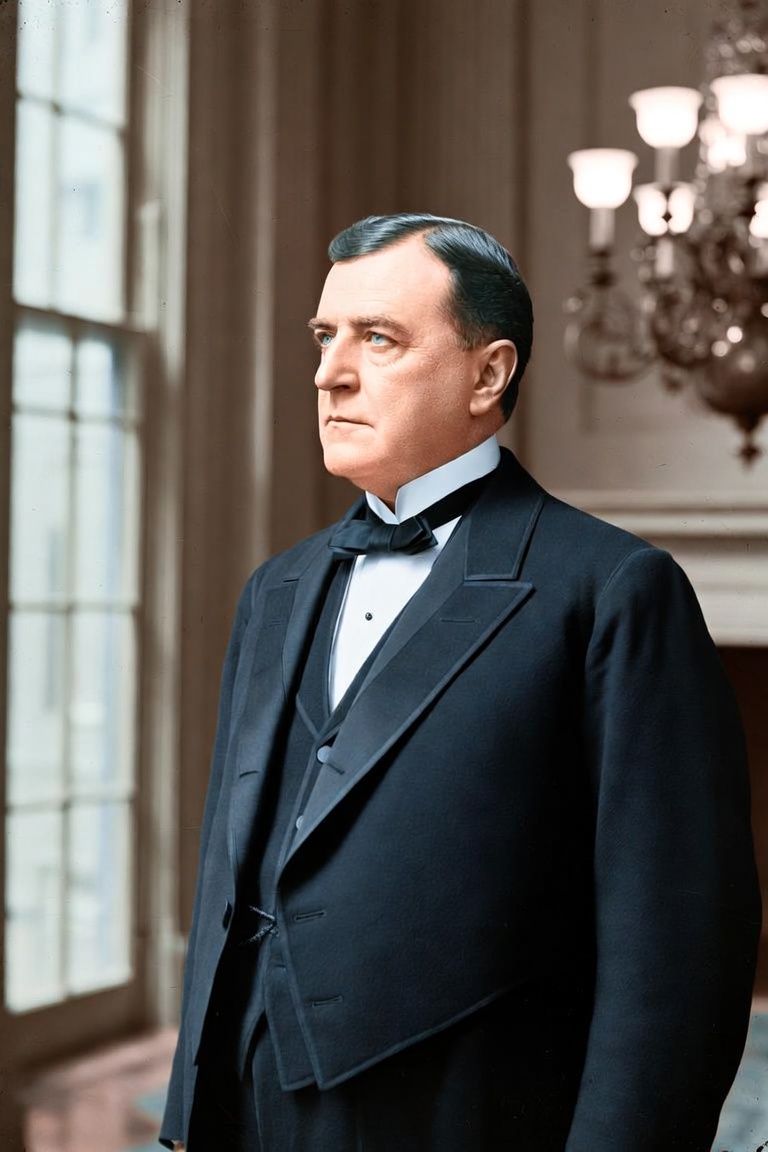
Short answer: William McKinley changed America’s role in the world by leading the nation during the Spanish-American War, acquiring overseas territories, expanding U.S. influence in the Pacific and the Caribbean, promoting international trade through the Open Door Policy, and transforming the United States into a rising global power. His presidency marked a turning point from a nation focused primarily on domestic growth to one with significant international responsibilities.
For much of the 19th century, the United States concentrated on expanding across North America and rebuilding after the Civil War. While the country participated in international trade and diplomacy, it generally avoided becoming deeply involved in overseas conflicts.
That changed during William McKinley’s presidency. Between 1897 and 1901, a series of military victories and foreign policy decisions dramatically increased America’s influence around the globe. By the end of McKinley’s presidency, the United States had emerged as a world power with overseas territories and growing international interests.
The Spanish-American War Changed Everything
The defining event of McKinley’s presidency was the Spanish-American War in 1898.
The conflict began after growing tensions between the United States and Spain over Cuba’s fight for independence. Public outrage intensified following the explosion of the battleship USS Maine in Havana Harbor, although the exact cause of the explosion remains debated by historians.
After Congress declared war, the conflict lasted only a few months. American forces won decisive victories in both the Caribbean and the Pacific, demonstrating that the United States had become a capable military power.
The war fundamentally changed America’s place in world affairs.
The United States Gained Overseas Territories
The Treaty of Paris, signed in December 1898, dramatically expanded American influence.
As part of the agreement, Spain gave up control of several territories, and the United States acquired:
- Puerto Rico
- Guam
- The Philippines
The United States also established control over Cuba for a period before Cuba became formally independent in 1902.
For the first time, the United States possessed significant overseas territories located thousands of miles from the mainland. This represented a major shift from earlier American policies that had focused largely on continental expansion.
The acquisitions also gave the United States new naval bases and strategic locations that strengthened its presence in both the Atlantic and Pacific Oceans.
McKinley Expanded America’s Presence in the Pacific
McKinley understood that the Pacific Ocean would become increasingly important for trade and national security.
In 1898, the United States formally annexed Hawaii after years of growing American economic and strategic involvement in the islands.
Hawaii’s location made it an ideal naval base and an important stop for ships traveling between North America and Asia.
Combined with the acquisition of Guam and the Philippines, the annexation of Hawaii significantly expanded American influence across the Pacific and positioned the country as a major player in the region.
The Open Door Policy Promoted American Trade
McKinley’s administration also expanded America’s global influence through diplomacy.
Secretary of State John Hay introduced the Open Door Policy in 1899, encouraging equal trading opportunities in China for all major nations.
Rather than allowing European powers to divide China into exclusive economic zones, the policy sought to preserve open markets where American businesses could compete fairly.
Although enforcement proved difficult, the Open Door Policy became one of the guiding principles of American foreign policy in Asia for decades.
It also reflected McKinley’s belief that economic growth depended on expanding international trade.
A Larger Navy Strengthened American Influence
McKinley believed a stronger military was essential for protecting America’s growing international interests.
Following recommendations from naval strategist Alfred Thayer Mahan, the United States invested heavily in modern battleships and expanded its navy during the late 1890s.
The Spanish-American War demonstrated the effectiveness of this modernization. American naval victories in Manila Bay and Santiago Harbor showcased the nation’s growing military capabilities and increased respect for the United States around the world.
A stronger navy also enabled the country to protect overseas territories and international trade routes.
The Debate Over American Expansion
Not everyone supported McKinley’s foreign policy.
Many Americans questioned whether acquiring overseas territories was consistent with the nation’s founding principles.
The Anti-Imperialist League, which included prominent figures such as Andrew Carnegie and Mark Twain, argued that governing distant territories without granting immediate self-government contradicted America’s commitment to liberty and self-determination.
Supporters of McKinley’s policies believed overseas expansion would strengthen national security, create new markets for American goods, and increase the country’s global influence.
This debate over America’s role in the world continued long after McKinley’s presidency ended.
How McKinley Changed American Foreign Policy
| Action | Long-Term Impact |
| Led the Spanish-American War | Established the United States as a global military power |
| Acquired Puerto Rico, Guam, and the Philippines | Expanded America’s overseas presence |
| Annexed Hawaii | Strengthened U.S. influence in the Pacific |
| Supported the Open Door Policy | Expanded international trade opportunities |
| Modernized the Navy | Increased America’s ability to project power overseas |
Together, these actions transformed how the United States interacted with the rest of the world.
Frequently Asked Questions
Why is William McKinley important in American foreign policy?
McKinley led the United States during the Spanish-American War, oversaw the acquisition of overseas territories, expanded American influence in the Pacific, and helped position the country as a major world power.
What territories did the United States gain during McKinley’s presidency?
Following the Spanish-American War, the United States acquired Puerto Rico, Guam, and the Philippines through the Treaty of Paris. During McKinley’s presidency, the United States also annexed Hawaii.
How did the Spanish-American War change America’s role in the world?
The war marked the emergence of the United States as an international power with overseas territories, a stronger navy, and greater influence in global diplomacy and trade.
America’s Role in the World
William McKinley transformed America’s role in the world by leading the nation through the Spanish-American War, expanding its overseas territories, strengthening its military, and encouraging international trade. His presidency marked the beginning of a new era in which the United States became an active participant in global affairs rather than focusing primarily on domestic expansion.
Although later presidents, especially Theodore Roosevelt, continued to expand America’s international influence, many of the foundations of modern U.S. foreign policy were established during McKinley’s administration. His leadership helped launch the United States onto the world stage, where it would become one of the most influential nations of the 20th century.