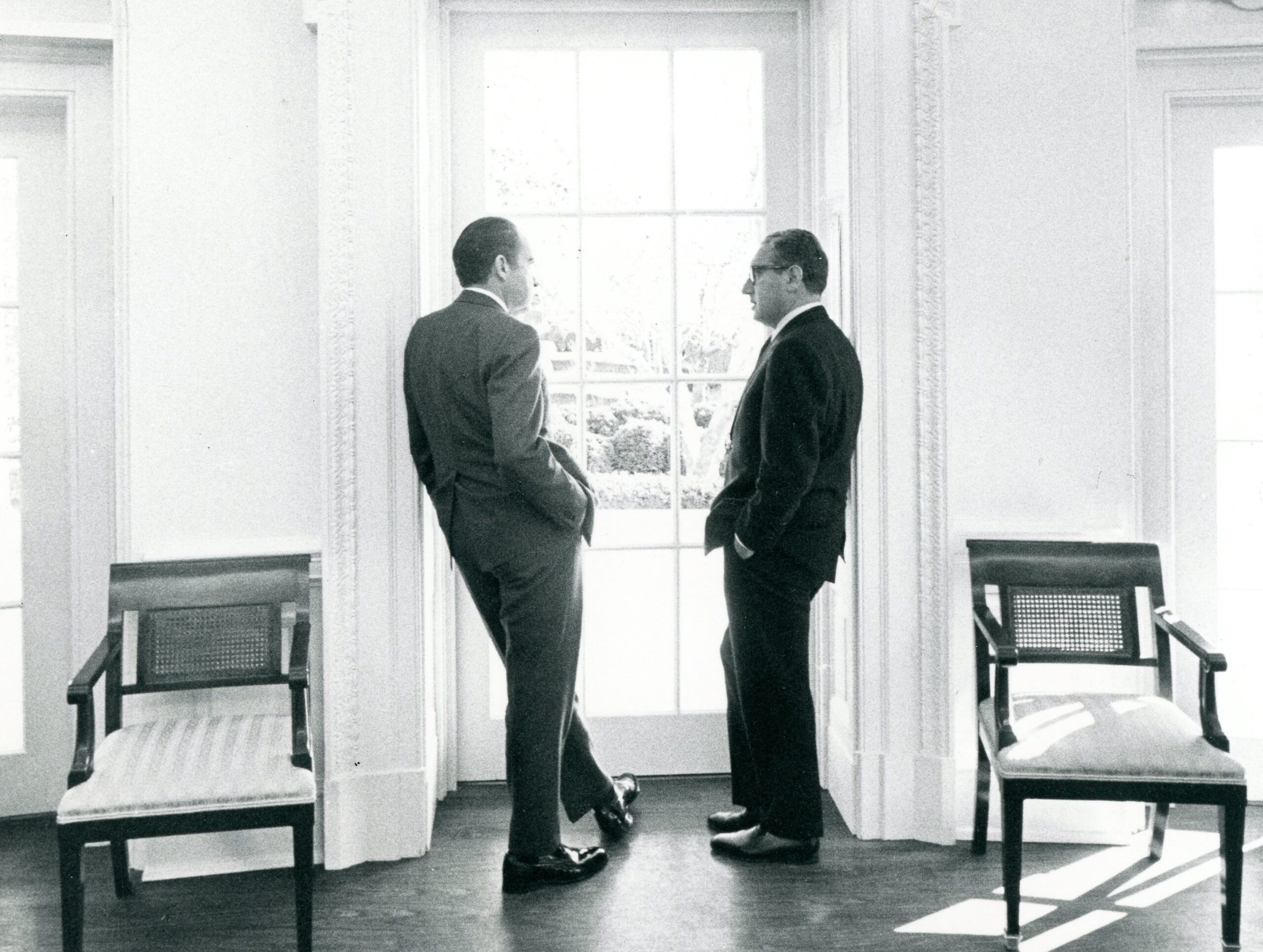
Few presidential partnerships in American history had a greater impact on world affairs than Richard Nixon and Henry Kissinger. During the early 1970s, the two men guided United States foreign policy through one of the most tense periods of the Cold War. Their decisions changed relationships with China, altered the balance of power with the Soviet Union, and redefined how America approached diplomacy.
While both figures remain controversial, there is no doubt that Richard Nixon and Henry Kissinger reshaped global politics in lasting ways. Their strategy was built on realism, power balance, and long-term geopolitical thinking rather than idealism alone.
The Nixon-Kissinger Partnership Begins
When Richard Nixon became president in 1969, he selected Henry Kissinger as National Security Advisor. Nixon valued Kissinger’s deep knowledge of international relations and his strategic mind. Kissinger, in turn, admired Nixon’s instincts on foreign affairs and his willingness to make bold moves.
The partnership was unusual because Nixon often relied heavily on the White House rather than the traditional State Department. This gave Kissinger enormous influence over foreign policy decisions. Together, they developed a close working relationship focused on secrecy, speed, and direct control of diplomacy.
Their approach sometimes frustrated cabinet officials and career diplomats, but it also allowed them to move quickly during a dangerous era.
Opening Relations With China
One of the biggest achievements of Richard Nixon and Henry Kissinger was the opening of relations with Communist China. Since the Chinese Revolution in 1949, the United States had no formal relationship with Beijing.
Nixon believed that improving ties with China could strengthen America’s position against the Soviet Union. Kissinger secretly traveled to China in 1971 to prepare the groundwork for a historic breakthrough.
In 1972, Nixon visited China in one of the most dramatic diplomatic moments of the twentieth century. The visit led to the Shanghai Communiqué, which began a new era in U.S.-China relations.
This move shocked the world and showed that Nixon and Kissinger were willing to challenge old assumptions. Their China strategy also gave the United States new leverage in the Cold War.
Détente With the Soviet Union
At the same time, Nixon and Kissinger pursued détente with the Soviet Union. Détente was a policy aimed at reducing tensions between the two nuclear superpowers.
Rather than endless confrontation, they believed competition could be managed through negotiation. In 1972, Nixon traveled to Moscow and met Soviet leader Leonid Brezhnev. The visit resulted in important agreements, including the Strategic Arms Limitation Talks, known as SALT I.
These talks placed limits on certain nuclear weapons systems and marked a major moment in arms control history. Nixon and Kissinger believed that diplomacy with Moscow could reduce the risk of war while preserving American strength.
Their policy did not end the Cold War, but it changed how the superpowers interacted.
The Vietnam War and Peace Talks
The Vietnam War was one of the most difficult issues facing Nixon and Kissinger. Nixon had inherited a deeply unpopular war and wanted to end direct American involvement without appearing weak.
Their strategy included Vietnamization, which shifted combat responsibility to South Vietnamese forces while gradually withdrawing U.S. troops. At the same time, Kissinger engaged in secret peace talks with North Vietnam.
In 1973, the Paris Peace Accords were signed. The agreement helped end direct American military involvement. Kissinger even received the Nobel Peace Prize, though controversy surrounded the award because fighting later resumed.
The Vietnam War remains one of the most debated parts of their legacy. Critics point to bombings in Cambodia and Laos, while supporters argue they managed a difficult exit from a conflict they inherited.
Realpolitik and Global Strategy
Richard Nixon and Henry Kissinger were known for practicing Realpolitik, a foreign policy style based on practical interests rather than ideology. They focused on balance of power, strategic alliances, and national advantage.
This meant working with nations whose values differed sharply from America’s if it served broader goals. Their supporters saw this as realistic leadership in a dangerous world. Critics argued it ignored human rights and moral concerns.
Still, their methods influenced generations of policymakers. Many later presidents used similar strategies when dealing with rivals and unstable regions.
Controversies and Criticism
No discussion of Nixon and Kissinger is complete without acknowledging controversy. Nixon’s presidency ended with Watergate, which overshadowed many foreign policy successes. Kissinger also faced criticism over covert operations and U.S. involvement in foreign conflicts.
Some historians praise their strategic vision, while others condemn the human cost of certain decisions. The debate over their legacy continues today.
Yet even critics often recognize that they understood global power politics at an exceptional level.
Lasting Legacy
Richard Nixon and Henry Kissinger reshaped global politics by changing America’s relationships with China and the Soviet Union, redefining Cold War diplomacy, and pursuing a new style of strategic leadership.
Their partnership showed how two determined figures could alter the international system through negotiation, leverage, and bold decision-making. Decades later, the effects of their policies can still be seen in modern U.S.-China relations, arms control debates, and the use of strategic diplomacy.
Whether viewed as master strategists or controversial pragmatists, Nixon and Kissinger remain central figures in the story of twentieth-century world politics.