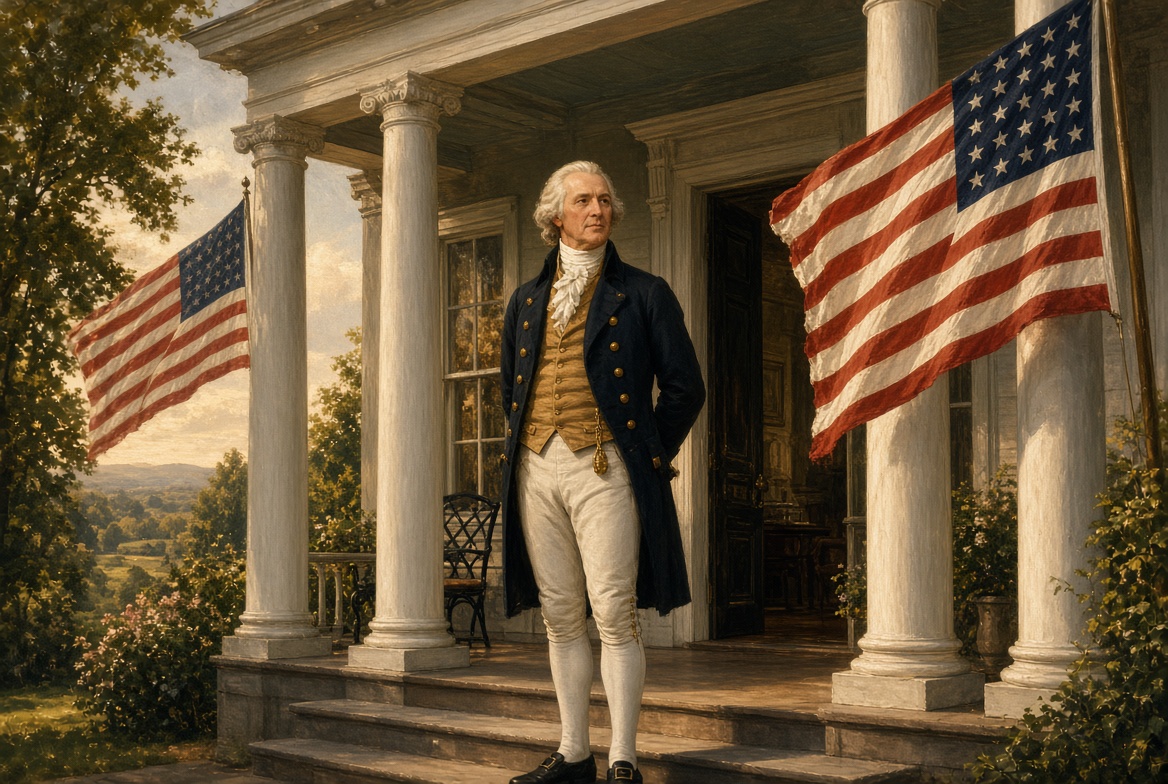
Imagine a time in American history when political disagreements appeared to fade, national pride was growing, and a president could win reelection with almost no opposition. It sounds like an unlikely period in American politics, but that was the atmosphere surrounding much of James Monroe’s presidency.
From 1817 to 1825, the United States experienced a renewed sense of national unity following the War of 1812. Political divisions seemed to be declining, economic opportunities were expanding, and Americans were increasingly confident in their young nation’s future.
This period became known as the Era of Good Feelings, a nickname associated with President James Monroe and the relatively peaceful political atmosphere of his administration.
However, the name does not tell the entire story. Beneath the optimism were serious economic problems, disagreements over slavery, and growing regional tensions that would eventually challenge the country’s unity.
So, why did James Monroe’s presidency become known as the Era of Good Feelings, and was the country really as united as the nickname suggests?
What Was the Era of Good Feelings?
The Era of Good Feelings refers to a period of American history generally associated with James Monroe’s two presidential terms, from 1817 through 1825.
It was characterized by several important developments:
- Increased American nationalism following the War of 1812.
- The decline of the Federalist Party as a major political force.
- Greater political dominance by the Democratic-Republicans.
- A renewed sense of national identity and confidence.
- A popular president who emphasized national unity over political divisions.
Monroe became the fifth president of the United States after winning the 1816 election. He defeated Federalist candidate Rufus King by a substantial margin.
By the time Monroe sought reelection in 1820, the Federalist Party had weakened considerably. Monroe faced virtually no organized opposition and won an overwhelming Electoral College victory, receiving all but one electoral vote.
These circumstances helped create the impression that American politics had entered a period of unusual harmony.
However, the Era of Good Feelings was not a period without political disagreements. Instead, it reflected a temporary decline in the intense partisan conflicts that had characterized earlier administrations.
How Did the War of 1812 Help Create the Era of Good Feelings?
One of the biggest reasons behind the Era of Good Feelings was the outcome of the War of 1812.
The United States fought Great Britain between 1812 and 1815 over issues including British interference with American shipping, restrictions on trade, and the impressment of American sailors.
Although the Treaty of Ghent officially ended the war in December 1814, news of American military successes, particularly Andrew Jackson’s victory at the Battle of New Orleans in January 1815, helped create a wave of national pride.
The United States had survived another major conflict with Great Britain, the same country it had fought to gain independence.
This strengthened the belief that the young republic could defend itself and establish a more influential position internationally.
A New Sense of American Nationalism
The War of 1812 encouraged Americans to think beyond their individual states and identify more strongly with the nation as a whole.
Several developments contributed to this growing nationalism:
- Military confidence: American victories helped restore national pride.
- Economic independence: The war encouraged domestic manufacturing as Americans sought alternatives to British imports.
- National identity: Americans increasingly viewed themselves as members of a growing nation rather than simply citizens of individual states.
- Political cooperation: The decline of intense party competition created opportunities for broader agreement on national priorities.
This growing nationalism provided the foundation for Monroe’s presidency and the political atmosphere that earned the period its famous nickname.
Why Was It Called the Era of Good Feelings?
Interestingly, the phrase did not originate with Monroe himself. It came from a newspaper article published during his presidential visit to Boston in July 1817.
After taking office, Monroe began traveling throughout the country to meet Americans and demonstrate that his administration represented the entire nation rather than just one political party.
His visit to Boston was particularly significant because Massachusetts had been a stronghold of Federalist opposition during the War of 1812.
Monroe’s Presidential Goodwill Tour
Monroe’s 1817 visit to Boston attracted enormous attention. Residents welcomed him with celebrations, public gatherings, and banquets.
The president also attended a dinner that included former President John Adams, a prominent Federalist who had once been a political opponent of Monroe’s party.
The gathering symbolized a willingness among former political rivals to put aside some of their disagreements.
On July 12, 1817, the Boston newspaper Columbian Centinel published an article under the headline “Era of Good Feelings.”
The article described how people who had previously been separated by political disagreements were now gathering together socially.
The phrase quickly spread beyond Boston and became associated with Monroe’s presidency.
Monroe’s Approach to National Unity
Monroe helped reinforce this atmosphere through his approach to presidential leadership.
Rather than making every political decision along strict party lines, he attempted to build a government that included individuals from different political backgrounds.
His cabinet included notable figures such as:
- John Quincy Adams: Secretary of State, who played a major role in American diplomacy.
- John C. Calhoun: Secretary of War, who later became vice president.
- William H. Crawford: Secretary of the Treasury, an influential Democratic-Republican politician.
Monroe’s willingness to emphasize national interests over partisan loyalty helped strengthen his popularity.
The Decline of the Federalist Party
Another major reason for the Era of Good Feelings was the collapse of the Federalist Party as a significant national political organization.
The Federalists had previously been one of America’s two major political parties, competing against the Democratic-Republicans.
However, their opposition to the War of 1812 damaged their reputation.
The Hartford Convention of 1814–1815 further weakened the party. Federalist delegates from New England gathered to discuss grievances against the federal government and proposed constitutional changes.
Although the convention did not formally advocate secession, its timing created the impression that Federalists were undermining the country during wartime.
The American victory at New Orleans and the peace agreement with Great Britain made the Federalists appear increasingly disconnected from the national mood.
By Monroe’s presidency, the party was losing influence and struggling to remain politically relevant.
With the Federalists weakened, the Democratic-Republicans dominated national politics.
This created a period of reduced competition between organized political parties, although disagreements within the Democratic-Republican Party itself continued to grow.
Was the Era of Good Feelings Really a Period of National Unity?
Despite its optimistic name, the Era of Good Feelings was not without serious problems.
Several major developments exposed divisions that would eventually undermine the appearance of national harmony.
The Panic of 1819
In 1819, the United States experienced its first major peacetime financial crisis.
Known as the Panic of 1819, the economic downturn was caused by several factors, including excessive lending, declining agricultural prices, and tighter credit conditions.
The crisis resulted in:
- Bank failures and financial instability.
- Business closures.
- Rising unemployment.
- Falling property values.
- Financial difficulties for farmers and ordinary Americans.
The economic hardship weakened public confidence in the government and exposed disagreements about banking and federal economic policy.
For many Americans, the good feelings of the previous years were quickly disappearing.
The Missouri Compromise of 1820
Perhaps the greatest threat to national unity during Monroe’s presidency was the growing disagreement over slavery.
In 1819, Missouri applied for admission to the Union as a slave state. This created a major debate in Congress because admitting another slave state threatened the existing political balance between free and slave states.
Northern representatives increasingly opposed the expansion of slavery, while Southern representatives defended the institution and their region’s political interests.
The controversy eventually resulted in the Missouri Compromise of 1820.
Under the agreement:
- Missouri entered the Union as a slave state.
- Maine entered the Union as a free state.
- Slavery was prohibited in most remaining Louisiana Purchase territory north of latitude 36°30′, with Missouri excluded.
The compromise temporarily prevented a major political crisis, but it did not resolve the underlying disagreement over slavery.
Instead, it revealed how deeply divided the country had become along regional lines.
What Were James Monroe’s Other Major Accomplishments?
Although the Era of Good Feelings is primarily associated with national unity, Monroe’s presidency also included several important developments.
Two deserve particular attention.
The Adams-Onís Treaty (1819): Negotiated by Secretary of State John Quincy Adams, this agreement with Spain resulted in the United States acquiring Florida. It also helped establish a clearer boundary between American and Spanish territorial claims.
The Monroe Doctrine (1823): Monroe announced that European powers should not attempt to establish new colonies or interfere in the affairs of independent nations in the Western Hemisphere. The policy became a major foundation of American foreign relations.
These developments demonstrated that the United States was becoming more confident in its position in international affairs.
Why Did the Era of Good Feelings Eventually End?
The Era of Good Feelings gradually disappeared as economic and political disagreements became increasingly difficult to ignore.
The Panic of 1819 damaged public confidence, while the Missouri Compromise exposed deep divisions over slavery and the balance of power between Northern and Southern states.
Political disagreements also developed within the Democratic-Republican Party.
Without a strong Federalist opposition, competing factions within the dominant party increasingly fought over economic policy, federal authority, and political leadership.
These divisions became especially apparent during the presidential election of 1824.
Four major candidates from the Democratic-Republican Party competed for the presidency: John Quincy Adams, Andrew Jackson, Henry Clay, and William H. Crawford.
The election was controversial and ultimately decided by the House of Representatives after no candidate secured an Electoral College majority.
The political conflict surrounding the election demonstrated that the period of relative partisan harmony had ended.
American politics was entering a new era of competition and division.
Why Was James Monroe’s Presidency Called the Era of Good Feelings?
James Monroe’s presidency became known as the Era of Good Feelings because of the renewed national pride, declining party conflict, and widespread optimism that followed the War of 1812.
Monroe’s popular presidential tours, efforts to promote national unity, and overwhelming reelection victory helped reinforce the impression that Americans were moving beyond their earlier political divisions.
However, the nickname only tells part of the story.
The Panic of 1819, the Missouri Compromise, and growing disagreements over slavery revealed that the United States remained deeply divided beneath its optimistic exterior.
Ultimately, the Era of Good Feelings represents an important chapter in early American history. It was a time of growing national confidence, but also a reminder that political unity can sometimes hide much deeper problems.
Understanding Monroe’s presidency helps explain how the United States evolved from a young republic struggling to establish its identity into a growing nation facing increasingly complicated political and regional conflicts.