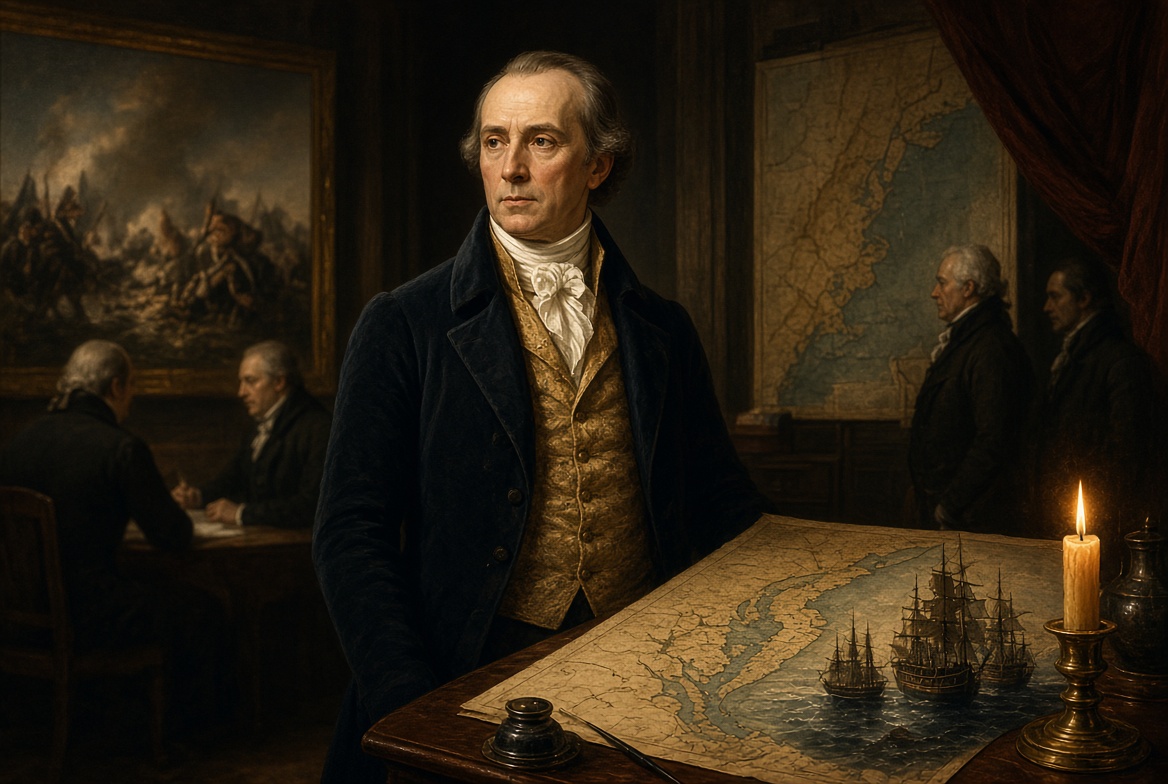
James Madison is remembered as the Father of the Constitution, one of America’s most influential founding fathers, and the fourth president of the United States. However, his presidency also faced one of the young nation’s most significant military challenges: the War of 1812. Fought against Great Britain between 1812 and 1815, the conflict tested American independence, military preparedness, national unity, and presidential leadership.
So, how did James Madison handle the War of 1812? His response was a mixture of diplomatic efforts, political determination, military setbacks, and eventual acceptance of peace. Although Madison believed war was necessary to defend American interests, his administration struggled with military organization, political opposition, and British military strength. The British even captured and burned Washington, D.C., in 1814.
Despite these humiliating setbacks, Madison guided the country through the conflict and ultimately secured a peace agreement that preserved American independence and territorial boundaries.
Why Did James Madison Lead the United States Into the War of 1812?
To understand Madison’s wartime decisions, it is important to examine the circumstances that led to the conflict.
During the early 1800s, Great Britain and France were engaged in the Napoleonic Wars. Both European powers attempted to restrict American trade with their enemies, creating serious problems for the United States, which depended heavily on international commerce.
Great Britain became a particular source of frustration for American leaders.
Several issues contributed to growing tensions:
- Impressment: British naval officers forcibly removed sailors from American merchant ships and forced them to serve in the British Navy.
- Trade restrictions: British policies interfered with American commercial activities and neutral shipping rights.
- Frontier conflicts: Many Americans believed Britain was encouraging Native American resistance to American expansion into western territories.
- National pride: American politicians increasingly viewed British interference as an insult to American sovereignty.
Madison initially hoped economic pressure and diplomatic negotiations would resolve the disagreements. However, these efforts failed to produce lasting results.
A group of congressional Republicans known as the War Hawks, including Henry Clay and John C. Calhoun, pushed for a more aggressive response.
On June 1, 1812, Madison sent Congress a message outlining the country’s grievances against Great Britain and requesting a declaration of war.
Congress narrowly approved the measure, and Madison signed it on June 18, 1812.
The United States had officially entered the War of 1812.
How Did James Madison Manage the Early Years of the War?
Madison entered the conflict with a military that was poorly prepared for a major war against one of the world’s most powerful naval forces.
The United States had a relatively small standing army, limited military supplies, inexperienced commanders, and significant disagreements between federal and state governments.
Madison’s administration believed that invading British-controlled Canada could provide an important strategic advantage.
The Failed Invasion of Canada
American military leaders expected that invading Canada would be relatively straightforward. Some believed Canadian residents would welcome American forces and help remove British control.
Those expectations proved badly mistaken.
In 1812, American military campaigns suffered several embarrassing defeats. One of the most significant occurred at Detroit, where General William Hull surrendered his army to British and Native American forces.
Other American advances into Canadian territory also failed.
Madison struggled to coordinate military operations and provide the resources necessary to support successful campaigns. Poor leadership, inadequate training, logistical problems, and disagreements between military officials repeatedly undermined American efforts.
The early failures demonstrated that declaring war was considerably easier than successfully fighting one.
Political Opposition Made the War More Difficult
Madison also faced significant opposition at home.
Many Federalists, particularly in New England, opposed the war because of its economic consequences and the disruption of trade with Britain.
Some states resisted providing militia forces for operations outside their borders. This created additional challenges for Madison’s administration as it attempted to organize a national military response.
The war also created divisions within Madison’s own Republican Party.
Rather than enjoying widespread public support, the president had to manage a country deeply divided over the decision to fight.
The Burning of Washington: Madison’s Biggest Wartime Failure
One of the most embarrassing moments of Madison’s presidency occurred in August 1814, when British forces invaded Washington, D.C.
By this point, Great Britain had redirected more military resources toward North America following Napoleon’s defeat in Europe.
British troops advanced through Maryland and defeated American forces at the Battle of Bladensburg on August 24, 1814.
The American military response was disorganized, and the British encountered relatively little resistance as they approached the capital.
Madison had traveled toward the battlefield to observe the situation. As the American defenses collapsed, he was forced to retreat.
British troops subsequently entered Washington and burned several important government buildings, including:
- The White House, then known as the President’s House.
- The United States Capitol.
- Other government buildings and public facilities.
The destruction represented a devastating symbolic defeat for the United States.
Madison and his administration were forced to evacuate the capital, while Dolley Madison famously helped preserve important national possessions, including Gilbert Stuart’s portrait of George Washington, before leaving the White House.
The burning of Washington exposed serious weaknesses in American military preparedness and Madison’s ability to organize an effective national defense.
How Did Madison Respond to the Attack?
Rather than abandoning the war, Madison worked to reorganize his administration and improve the country’s military response.
He became increasingly dissatisfied with Secretary of War John Armstrong’s performance and replaced him in September 1814 with James Monroe, who also served as secretary of state.
Madison’s administration continued supporting military operations, particularly efforts to defend important American cities and waterways.
Although the destruction of Washington was a major setback, the British did not achieve all their military objectives.
Their subsequent attack on Baltimore failed, and American forces successfully defended Fort McHenry in September 1814.
The American resistance at Baltimore became an important turning point in the country’s national identity. Francis Scott Key witnessed the bombardment and wrote the poem that eventually became the national anthem, “The Star-Spangled Banner.”
How Did James Madison Bring the War of 1812 to an End?
By 1814, both Great Britain and the United States were increasingly interested in ending the conflict.
The British had been fighting an expensive European war against Napoleon, while the United States had suffered substantial economic damage and military setbacks.
Neither country had achieved a decisive victory.
American diplomats traveled to Ghent, Belgium, to negotiate a peace agreement with British representatives.
The negotiations eventually produced the Treaty of Ghent, signed on December 24, 1814.
What Did the Treaty of Ghent Accomplish?
The agreement effectively restored the prewar territorial boundaries between the United States and Great Britain.
Neither side gained significant territorial concessions, and the treaty did not resolve every issue that had originally contributed to the conflict.
However, it successfully ended the war and allowed both countries to return to peaceful relations.
For Madison, the agreement represented an opportunity to end a costly conflict without surrendering American independence or territory.
The treaty was particularly important because the United States had entered the war with ambitious goals, including addressing British interference with American shipping and expanding its influence in North America.
Although Madison did not achieve all those objectives through military victory, the peace agreement prevented further bloodshed and preserved the country’s territorial integrity.
The Battle of New Orleans: A Victory After the Treaty
One of the most interesting details about the War of 1812 is that one of America’s greatest victories occurred after the peace treaty had already been signed.
On January 8, 1815, American forces commanded by General Andrew Jackson defeated a British army attempting to capture New Orleans.
The American victory was decisive and became one of the most celebrated events in the country’s early military history.
However, the Treaty of Ghent had been signed weeks earlier. Because communication across the Atlantic was slow, American and British forces had not yet received official news that peace had been agreed upon.
The Battle of New Orleans did not determine the treaty’s terms, but it dramatically improved the public perception of the war’s outcome.
For Madison, the victory provided a positive ending to a conflict that had included numerous military embarrassments.
Was James Madison Successful During the War of 1812?
Evaluating Madison’s performance as a wartime president is complicated.
On one hand, he led the country through a conflict against a major world power and ultimately secured peace without losing American territory.
On the other hand, his administration struggled with military preparedness, leadership disagreements, and national division.
There are several important ways to evaluate his wartime performance.
Where Madison struggled:
- The United States entered the war without adequate military preparation.
- American invasions of Canada repeatedly failed.
- Political divisions weakened the national war effort.
- Military leadership and coordination were often ineffective.
- British troops successfully invaded Washington and burned government buildings.
Where Madison succeeded:
- He maintained the country’s commitment to defending American sovereignty.
- His administration continued fighting despite significant military setbacks.
- American forces successfully defended important locations, including Baltimore and Lake Champlain.
- He accepted a negotiated peace that preserved American territorial boundaries.
- The war helped strengthen American national identity and confidence.
Ultimately, Madison’s performance was far from flawless. Historians frequently criticize his wartime leadership, particularly his reluctance to intervene decisively in military and administrative problems.
However, his presidency survived one of the most serious national security crises in early American history.
How Did the War of 1812 Change James Madison’s Presidency?
The experience of the War of 1812 significantly influenced Madison’s political and economic thinking.
Before the conflict, Madison generally favored a limited federal government and was skeptical of certain national economic institutions.
The war exposed the weaknesses of that approach.
The United States struggled to finance military operations, manufacture essential supplies, and maintain an effective national defense.
After the war, Madison became more supportive of several policies he had previously opposed or questioned.
These included:
- Establishing a national bank to help stabilize the country’s finances.
- Supporting tariffs that would encourage domestic manufacturing.
- Strengthening the federal government’s ability to support economic development.
- Improving the country’s military and financial preparedness.
In 1816, Madison signed legislation establishing the Second Bank of the United States.
His changing political positions demonstrated how the War of 1812 influenced his understanding of the federal government’s responsibilities.
The conflict had exposed the practical challenges of governing a growing nation, particularly when national security was threatened.
How Did James Madison Handle the War of 1812?
So, how did James Madison handle the War of 1812? His presidency was defined by a combination of determination, military miscalculations, political challenges, and eventual diplomatic success.
Madison believed the United States needed to defend its maritime rights, national sovereignty, and independence from British interference. However, his administration was poorly prepared for the realities of a major military conflict.
The failed invasion of Canada and the burning of Washington exposed significant weaknesses in his wartime leadership. Nevertheless, Madison remained in office, reorganized his administration, supported continued military resistance, and ultimately accepted the Treaty of Ghent.
Although the United States did not achieve a decisive military victory, it emerged from the conflict with its independence and territorial boundaries intact.
The War of 1812 also helped shape Madison’s final years as president, changing his views on banking, manufacturing, and the responsibilities of the federal government.
Madison’s handling of the war remains an important part of his presidential legacy. His experience demonstrates how difficult it can be to balance military preparedness, political opposition, national security, and presidential leadership during a time of crisis.
Understanding his decisions provides valuable insight into the challenges faced by America’s early presidents and the development of the United States as an independent nation.