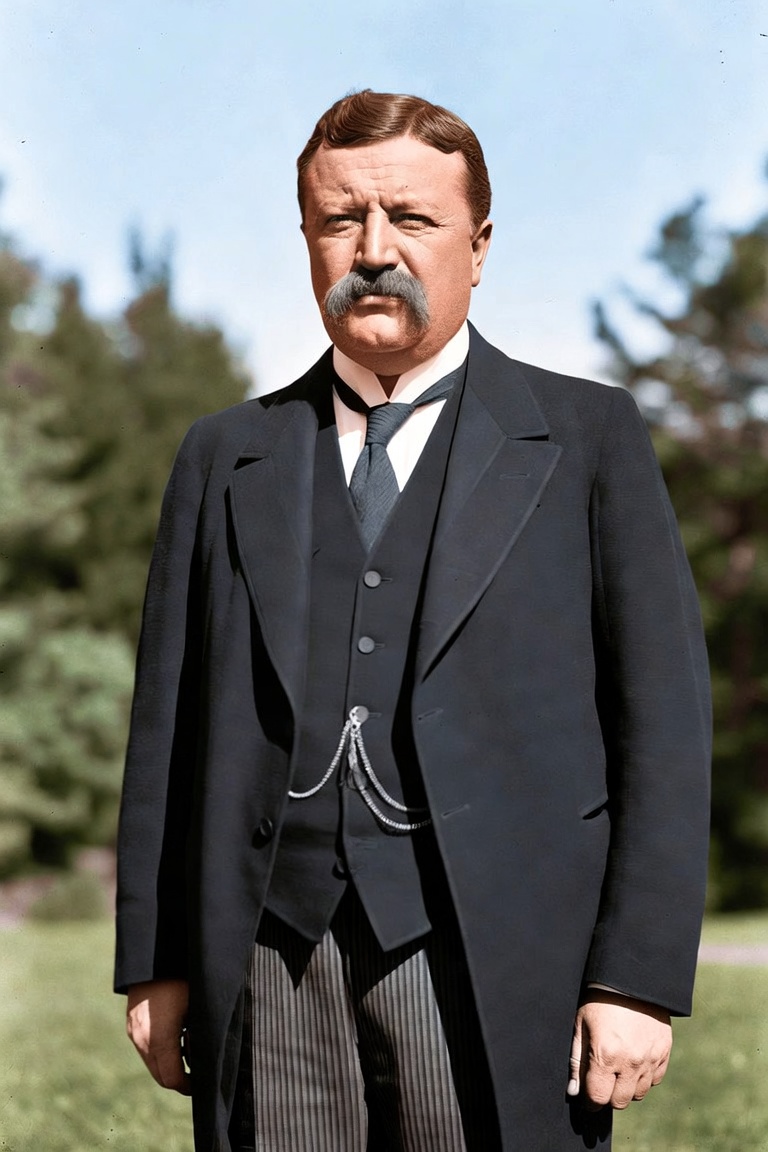
Short answer: Theodore Roosevelt was called the “Trust Buster” because he used federal laws to break up powerful monopolies, known as trusts, that limited competition and controlled major industries. Rather than opposing all big businesses, Roosevelt believed the federal government should regulate corporations and eliminate those that abused their power over consumers, workers, and competitors.
At the beginning of the 20th century, a handful of enormous corporations dominated many parts of the American economy. These companies controlled industries such as railroads, oil, steel, and finance, often leaving smaller businesses unable to compete. Many Americans believed these monopolies had become too powerful and influenced both the economy and the government.
When Theodore Roosevelt became president in 1901, he made it clear that no corporation was above the law. His aggressive enforcement of federal antitrust laws earned him the nickname “Trust Buster” and forever changed the relationship between the federal government and big business.
What Were Trusts?
To understand Roosevelt’s nickname, it helps to know what a trust was.
During the late 1800s, many companies combined with competitors to form massive organizations that controlled nearly every aspect of an industry. These arrangements, commonly called trusts, allowed a small group of business leaders to dominate markets by reducing competition.
Some trusts lowered production costs and improved efficiency. Others used their size to eliminate competitors, raise prices, influence transportation costs, or pressure suppliers.
By the early 1900s, many Americans worried that these corporations had accumulated too much economic and political power.
Roosevelt Believed in “Good” and “Bad” Trusts
Contrary to popular belief, Theodore Roosevelt did not want to destroy every large corporation.
Instead, he believed there was an important difference between good trusts and bad trusts.
Good trusts operated fairly, treated consumers reasonably, and helped the economy grow. Bad trusts abused their power by crushing competition, manipulating prices, or using unfair business practices.
Roosevelt believed the federal government had a responsibility to regulate businesses that acted unfairly while allowing responsible companies to continue operating.
This balanced approach became one of the defining features of his presidency.
The Northern Securities Case
Roosevelt’s reputation as the Trust Buster began with one of the most important antitrust cases in American history.
In 1902, his administration sued the Northern Securities Company, a massive railroad holding company created by some of the nation’s most powerful financiers, including J. P. Morgan and James J. Hill.
The government argued that the company violated the Sherman Antitrust Act of 1890 by reducing competition in the railroad industry.
In 1904, the U.S. Supreme Court ruled in favor of Roosevelt’s administration and ordered Northern Securities to be dissolved.
The decision shocked many business leaders and demonstrated that even the largest corporations could be challenged by the federal government.
Roosevelt Enforced the Sherman Antitrust Act
The Sherman Antitrust Act had existed for more than a decade before Roosevelt became president, but previous administrations had used it only sparingly.
Roosevelt changed that.
During his presidency, the Justice Department filed lawsuits against more than 40 corporations accused of violating federal antitrust laws. These cases involved industries such as railroads, meatpacking, oil, and manufacturing.
His administration did not win every case, but Roosevelt established the principle that the federal government could intervene when corporations violated the law or harmed competition.
This marked a major shift in presidential leadership and expanded the federal government’s role in regulating the economy.
The Square Deal
Roosevelt’s trust-busting efforts were part of a broader domestic program known as the Square Deal.
The Square Deal focused on three major goals:
- Controlling large corporations through fair regulation.
- Protecting consumers from unsafe products.
- Conserving the nation’s natural resources.
Rather than favoring either businesses or labor unions, Roosevelt believed the government should serve as an impartial referee that protected the public interest.
His approach appealed to many Americans who wanted economic growth without allowing corporations to gain unchecked power.
Did Roosevelt Break Up Every Monopoly?
Despite his famous nickname, Roosevelt did not attempt to eliminate every monopoly.
Some large businesses remained intact because they operated within the law or provided important economic benefits.
Roosevelt’s goal was not to punish companies simply because they were large. Instead, he focused on corporations that engaged in unfair or illegal practices.
This distinction explains why many historians describe Roosevelt as a trust regulator as much as a trust buster.
Why the Nickname Endured
The press played a major role in popularizing Roosevelt’s reputation.
Political cartoons frequently depicted him carrying a large stick while attacking giant monopolies or battling oversized corporate figures. Newspapers embraced the phrase “Trust Buster,” and the nickname quickly became associated with his presidency.
Although Roosevelt sometimes objected to the idea that he opposed all big business, the nickname reflected his willingness to challenge powerful corporations when previous presidents had been reluctant to do so.
Roosevelt’s Legacy on Business Regulation
Roosevelt’s actions reshaped the relationship between business and government.
Future presidents, including William Howard Taft and Woodrow Wilson, continued using antitrust laws to regulate monopolies. Roosevelt also helped establish the expectation that presidents should actively protect competition and consumers rather than simply allowing markets to regulate themselves.
His presidency marked the beginning of a more active federal role in overseeing the American economy.
Frequently Asked Questions
Why was Theodore Roosevelt called the Trust Buster?
Roosevelt earned the nickname because his administration aggressively enforced antitrust laws against monopolies that abused their market power, beginning with the famous Northern Securities case.
What was a trust?
A trust was a combination of companies that controlled a large share of an industry. Some trusts operated fairly, while others reduced competition and dominated markets through unfair business practices.
Did Theodore Roosevelt oppose all big businesses?
No. Roosevelt believed there were both “good” and “bad” trusts. He supported large companies that operated fairly but wanted the federal government to regulate or break up corporations that violated antitrust laws.
Roosevelt Transformed the Government
Theodore Roosevelt was called the Trust Buster because he transformed the federal government’s approach to regulating powerful corporations. By enforcing the Sherman Antitrust Act, winning the landmark Northern Securities case, and challenging monopolies that harmed competition, he demonstrated that no business was above the law.
Although Roosevelt did not seek to eliminate every large corporation, he believed government had a responsibility to protect consumers, preserve fair competition, and ensure that economic power served the public interest. His trust-busting legacy continues to influence debates over corporate regulation more than a century after he left office.