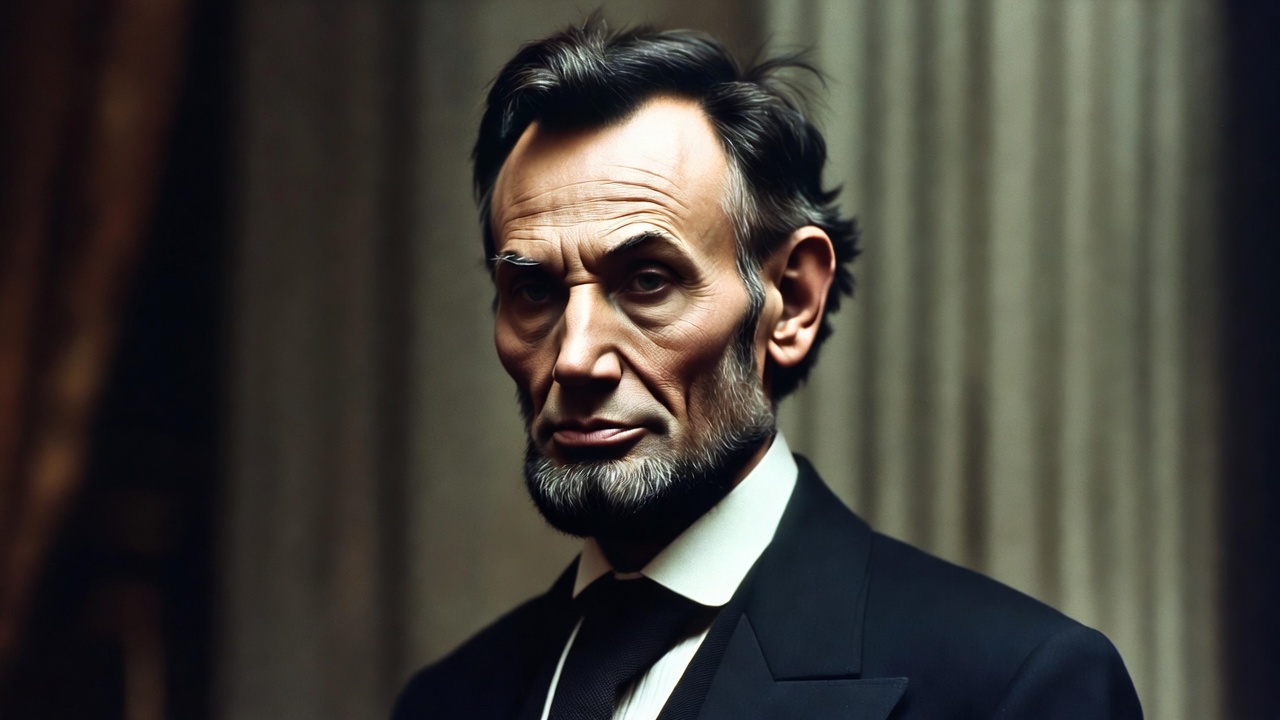
When Abraham Lincoln took office in 1861, the United States faced its greatest crisis. Several Southern states had already declared secession, formed the Confederate States of America, and claimed the Union no longer existed. Armed conflict was rapidly approaching, and many feared the American experiment in self-government would collapse.
Lincoln understood that more than territory was at stake. If the nation could be broken apart whenever elections produced disagreement, democratic government itself would be weakened. Through steady leadership, military resolve, and moral clarity, Lincoln preserved the Union and reshaped the future of the United States.
Lincoln Rejected Secession
From the beginning of his presidency, Lincoln insisted that secession was illegal. He argued that the Union was older than the Constitution and that no state could unilaterally leave it. If states could simply depart after losing elections, then constitutional government would become unstable.
In his First Inaugural Address, Lincoln pledged not to interfere with slavery where it already existed, but he firmly declared that the Union was perpetual. His goal was to avoid war while maintaining federal authority.
This position became the foundation of his presidency. Lincoln would negotiate where possible, but he would not recognize the breakup of the nation.
Responding to Fort Sumter
The crisis turned into war when Battle of Fort Sumter began in Charleston. Confederate forces fired on the federal fort, and after its surrender, Lincoln called for volunteers to suppress the rebellion.
This decision rallied Northern support and made clear that the federal government would defend itself. It also encouraged additional states to join the Confederacy, expanding the conflict into a full-scale civil war.
Lincoln now faced the enormous task of preserving the Union through military victory.
Leading Through the Civil War
Lincoln had little formal military experience, yet he became an effective wartime commander in chief. He studied strategy, reviewed battlefield reports, and gradually learned how to manage generals and resources.
Early in the war, Union commanders often disappointed him. Lincoln eventually elevated leaders such as Ulysses S. Grant and William Tecumseh Sherman, who pursued coordinated campaigns against Confederate forces.
He also oversaw mobilization on an unprecedented scale. The Union expanded its army, strengthened rail transportation, used industry to supply troops, and leveraged naval power to blockade Southern ports.
Lincoln’s willingness to adapt and find capable commanders was essential to Union success.
Expanding the Meaning of the War
As the conflict continued, Lincoln concluded that slavery was sustaining the Confederate war effort. In 1863, he issued the Emancipation Proclamation.
The proclamation did not immediately end slavery everywhere, but it transformed the war. The Union was now fighting not only to restore the nation but also to strike at slavery. It also discouraged foreign governments from recognizing the Confederacy and allowed Black soldiers to join the Union Army.
By broadening the purpose of the war, Lincoln strengthened the moral and strategic position of the Union.
Holding the Border States
Lincoln also preserved the Union by keeping key slaveholding border states such as Kentucky, Missouri, Maryland, and Delaware from joining the Confederacy.
These states had strategic value, manpower, and transportation networks. Losing them could have changed the war dramatically, especially because Washington was bordered by slave states.
Lincoln balanced firmness and political caution to keep these states in the Union camp.
Inspiring National Resolve
Lincoln’s speeches helped sustain morale during dark moments. His Gettysburg Address turned a battlefield ceremony into a defining statement of national purpose.
In just a few words, Lincoln connected the Civil War to the principles of equality and government by the people. He reminded Americans why preserving the Union mattered.
His Second Inaugural Address later called for healing “with malice toward none,” showing his desire for reconciliation after victory.
Winning Re-Election in 1864
Lincoln’s re-election in 1864 was another crucial moment. War fatigue was high, casualties were enormous, and some Northern voters wanted peace negotiations.
Had Lincoln lost, the Union war effort might have weakened. Instead, military victories and public support secured his second term, signaling continued commitment to victory and national reunion.
Why Lincoln’s Leadership Still Matters
Lincoln preserved the Union not through one action, but through persistence across many fronts. He defended constitutional government, adapted military strategy, opposed slavery, and kept public faith alive during the nation’s darkest years.
His leadership ensured that the United States remained one nation rather than splitting permanently into rival countries.
Saving the United States
How did Abraham Lincoln preserve the Union? He did it through courage, political skill, and unwavering dedication to national unity. By defeating secession and redefining freedom, Lincoln saved the United States at its moment of greatest peril.
He entered office facing collapse and left a nation still wounded but intact. Few presidents have carried a heavier burden or changed history more profoundly.